

Startseite / Produkte / Memory
Memory IC sourcing: flash, DRAM, EEPROM and FRAM
Serial and parallel flash, DDR and LPDDR DRAM, eMMC, EEPROM, SRAM and FRAM, by complete ordering code or by specification. We check density, voltage, speed bin, die revision and temperature grade on every line, and the boot and driver details that decide whether a second source works on your board.
- Active, EOL and allocated parts; samples to production
- Density, voltage, speed bin and die revision checked against the datasheet
- Second sources listed with what changes in the driver or bootloader
Was wir beschaffen
Six groups cover the memory on most BOMs. Each one is read by firmware, a bootloader or a memory controller, so a part is only a fit if that code still works with it.
Serial EEPROM
I²C, SPI and Microwire EEPROMs from 1 Kbit to 2 Mbit, for configuration and calibration data. Typical lines: AT24C02, 24LC256, M24C64, 93C46.
SPI and QSPI NOR flash
Boot and code flash from 4 Mbit to 2 Gbit, in SOIC-8, WSON and BGA. Typical lines: W25Q128JV, MX25L12835F, GD25Q128, IS25LP128.
NAND flash
Parallel SLC NAND and SPI NAND for file systems and data logging. Typical lines: MT29F4G08ABADAWP, W25N01GV, TC58NVG2S0.
DRAM
SDRAM, DDR3/DDR3L, DDR4, LPDDR4 and LPDDR4X in FBGA, matched to the processor's memory controller. Typical lines: MT41K256M16, MT40A512M16, K4B4G1646.
eMMC and managed NAND
eMMC 5.1 from 4 GB to 128 GB in 153-ball BGA, for Linux and Android designs. Quoted with the capacity, boot partition and temperature grade checked.
SRAM, FRAM and NVSRAM
Asynchronous SRAM, I²C and SPI FRAM, and battery-free non-volatile SRAM. Typical lines: IS62WV51216, CY62157, FM24CL64B, MB85RC256.
What a memory quote depends on
Send what you have. A complete ordering code is fastest; a requirement works too, and we come back with candidate codes.
- Complete ordering code, including density, organisation, speed, package, temperature and packing letters
- Quantity and target date, so we can compare distribution, independent stock and factory lead time
- Die revision, if your memory controller settings or qualification depend on it
- Date code window, if your quality system limits the age of stock
- Alternative rule: original only, discuss first, or your approved list
- For a requirement: type, density, interface, voltage, speed, package and temperature range
The quote line states the source channel, packaging, date code, lead time and validity. Parts are supplied blank, as packed by the manufacturer. Nothing is substituted without your written approval.
Representative parts and their key numbers
These are lines we see often. The numbers are the ones a replacement must match, taken from the manufacturers’ current datasheets.
24LC256-I/SN
I²C EEPROM
256 Kbit
2.5–5.5 V
64-byte page; 24AA256 runs from 1.7 V
SOIC-8
FM24CL64B-GTR
I²C FRAM
64 Kbit
2.7–3.65 V
No write delay; 1 MHz bus
SOIC-8
W25Q128JVSIQ
QSPI NOR flash
128 Mbit
2.7–3.6 V
133 MHz; 3-byte addressing covers the whole array
SOIC-8 208 mil
W25Q256JVEIQ
QSPI NOR flash
256 Mbit
2.7–3.6 V
Needs 4-byte addressing above 16 MB
WSON-8 8×6
MT29F4G08ABADAWP
SLC NAND
4 Gbit
3,3 V
2,048 + 64-byte page; 4-bit ECC per 528 bytes
TSOP-48
IS62WV51216BLL-55TLI
Async SRAM
8 Mbit (512K × 16)
2.5–3.6 V
55 ns access; industrial grade
TSOP-II 44
MT41K256M16TW-107:P
DDR3L SDRAM
4 Gbit (256M × 16)
1.35 V
DDR3-1866; also runs at 1.5 V
96-ball FBGA
MT40A512M16LY-062E
DDR4 SDRAM
8 Gbit (512M × 16)
1.2 V
DDR4-3200
96-ball FBGA
Example parts, not a stock list. Confirm the current datasheet and the exact suffix before design or purchase. Need one of these? Send the part number and we confirm the orderable code and stock.
How to specify each group
Two memory parts with the same density and footprint can still fail on your board. The difference is usually in voltage, timing or a command the driver sends at start-up.
Each tab lists what defines the part, the numbers to compare, the trap we see most often, and what to send so we can quote without guessing.

What defines the part. Density, interface (I²C, SPI or Microwire), supply range, page size, package and temperature grade.
Numbers to check. Minimum supply voltage, page size, maximum bus clock, write cycle time, device address pins.
Common trap. The prefix sets the voltage. 24LC256 is rated 2.5–5.5 V; 24AA256 and 24FC256 run from 1.7 V. On a 1.8 V rail, only the AA or FC part is in specification. Page size also varies by maker: AT24C02 writes 8 bytes per page and M24C02 writes 16, so firmware that writes 16 bytes at once wraps on the Atmel part.
Senden Sie uns: Full MPN, the supply rail, and the page size your firmware writes.
What defines the part. Density, supply voltage, interface width, package, temperature grade and packing.
Numbers to check. Supply range (3 V or 1.8 V), addressing mode, quad-enable default, sector size, JEDEC ID.
Common trap. At 256 Mbit and above, a 3-byte address no longer covers the array and the part needs 4-byte addressing. Many boot ROMs read in 3-byte mode, so a board that boots from W25Q128JV can fail with W25Q256JV if the flash is left in 4-byte mode after a reset. Also check the voltage letter: W25Q128JV is a 3 V part and W25Q128JW is 1.8 V.
Senden Sie uns: Full MPN, the processor or boot ROM, and whether your driver uses quad mode.
What defines the part. Density, cell type (SLC or MLC), interface (parallel or SPI), bus width, package and temperature grade.
Numbers to check. Page and spare-area size, block size, ECC requirement, bad-block marking, ONFI support.
Common trap. A newer die can change the page layout at the same density. MT29F4G08ABADAWP has a 2,048 + 64-byte page and 128 KB blocks; the MT29F4G08ABAFA die uses a 4,096 + 256-byte page and 256 KB blocks. The bootloader, file system and ECC scheme have to be set up for the new geometry, or they read the wrong data and bad-block markers.
Senden Sie uns: Full MPN, the controller or processor, and the ECC scheme your bootloader uses.
What defines the part. Generation, density, organisation (×8 or ×16), speed bin, voltage, package, temperature grade and die revision.
Numbers to check. Supply voltage, speed bin and CAS latency, organisation, die revision letter, temperature range.
Common trap. DDR3L runs at 1.35 V and can also run at 1.5 V. Plain DDR3 runs only at 1.5 V, so it is not a fit on a DDR3L board. The die revision letter after the colon (“:P” in MT41K256M16TW-107:P) can change timing, and controller settings tuned for one revision may need a check on the next.
Senden Sie uns: Full MPN including the die revision, the processor, and the board’s DRAM voltage.
What defines the part. JEDEC version, capacity, package, temperature grade and the manufacturer’s firmware.
Numbers to check. User capacity, boot partition size, enhanced (pSLC) area support, temperature range.
Common trap. Two eMMC parts with the same nominal capacity are rarely the same size in sectors. A factory image made at full size for one part may not fit the other, and boot partition sizes can differ between makers. Build the image a little smaller than the capacity, and check the boot configuration on a sample.
Senden Sie uns: Full MPN, image size, boot partition use, and the programming method in production.
What defines the part. Density, interface, access time or bus speed, supply range, package and temperature grade.
Numbers to check. Access time, supply range, write behaviour, data retention, endurance.
Common trap. FRAM writes immediately, with no delay. Replacing an I²C EEPROM with a pin-compatible FRAM usually works. Going the other way breaks firmware that never waits for the EEPROM’s write cycle, which takes up to 5 ms on 24LC256.
Senden Sie uns: Full MPN, the supply rail, and whether your firmware polls for write completion.
Six problems buyers find after the order
Each of these looks fine on a quote and shows up at the programming station, in DDR training or in the field. We check for them before a line is quoted.
Stored settings are corrupted after a write
EEPROM with a smaller page size than the firmware writes
Page size against the firmware’s write length
Board does not boot after a reset
NOR flash of 256 Mbit or more left in 4-byte address mode
Density, boot ROM addressing, reset handling
NAND boots fail after a die change
New die with a different page and block size
Page, spare-area and block size against the bootloader
Quad reads fail, single reads work
Second-source NOR with a different quad-enable bit or default
Status register layout in both datasheets
DDR training fails or the system crashes under load
Wrong voltage type, slower speed bin or a new die revision
Voltage, speed bin and die revision letter
Incoming inspection rejects genuine DRAM
Micron FBGA parts carry a short code, not the part number
Decode the FBGA code before you reject the lot
Worked example: why 16 MB is the boundary
A 3-byte address has 24 bits, which covers 224 = 16,777,216 bytes: exactly 16 MB, or 128 Mbit. W25Q128JV fits inside that range, so every read and erase uses a 3-byte address.
W25Q256JV holds 32 MB. To reach the upper half, the driver has to switch to 4-byte addressing or use 4-byte commands. If the processor resets while the flash is still in 4-byte mode, a boot ROM that sends 3-byte reads gets the wrong data and the board does not start.
So “same family, double the density” is a design change, not a purchasing one. We ask which processor boots from the flash before we quote a larger part. Send the flash and processor part numbers and we check both.
Worked example: the code on a Micron DRAM
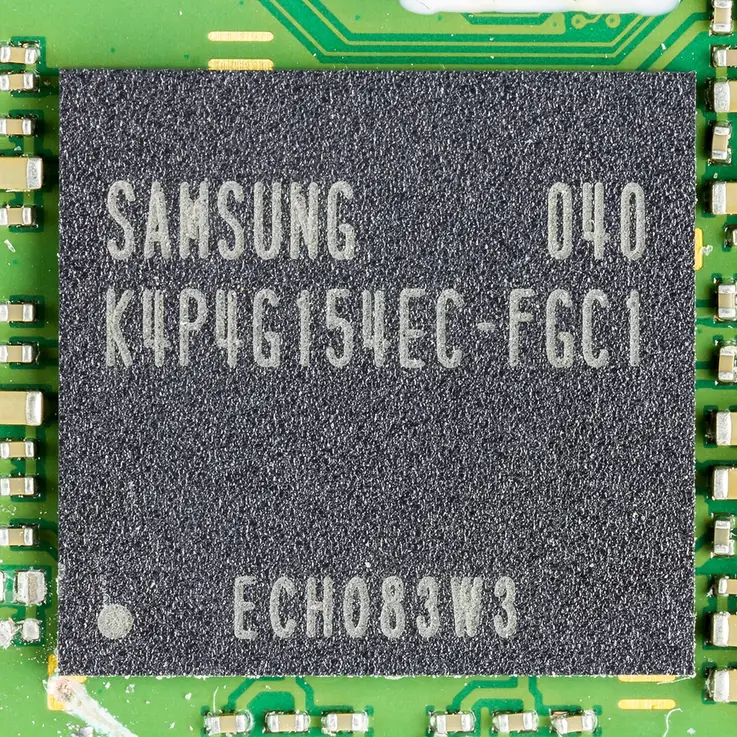
Micron FBGA packages are too small for the full part number. The top line carries a five-character FBGA code instead, which Micron’s online FBGA decoder translates into the full ordering code.
An inspector who compares the marking with the purchase order line will not find MT41K256M16TW-107:P on the part, and may reject a genuine lot. We decode the FBGA code during inspection and put the result in the inspection record, next to the date code.

Three requests we see, and how we handle them
Each started as a short message with a part number. What we check, and in which order, decides whether the buyer gets a usable part or a second problem.

"Our board uses DDR3L and the distributor quotes a long lead time"
Older DRAM generations get scarce as makers move capacity to newer ones. We quote distribution and independent stock with the die revision and date code on each line, and list DDR3L parts from other makers with the same density, organisation and speed bin as candidates for your engineers to test.
"W25Q128 at half price from a marketplace"
Copied and remarked SPI flash is common. We check the marking and the package outline, and recommend reading the JEDEC ID and the density with a programmer on a sample. A remarked part often reports a smaller density or a different maker.
"Our 8 GB eMMC is EOL, can we use the 16 GB one?"
Usually yes, but the larger part can need a new image layout and a check of the boot partition settings. We quote remaining stock of the original next to the larger part, and tell you which items to test on a sample before the change goes into production.
Where these parts go
A data logger in a control cabinet and a battery-powered sensor use the same memory types, specified differently. These are the requirements that change by application.

Industrielle Automatisierung
Industrial-grade NOR flash for firmware, FRAM for frequent logging, and SLC NAND where data must survive years of writes.
Motorsteuerung und Robotik
EEPROM and FRAM for parameters and fault logs; FRAM where data must be saved quickly when power is lost.
Stromversorgung & Energie
FRAM and EEPROM for meter readings and event logs, with industrial and extended temperature grades.
Edge AI & AIoT
LPDDR4 or DDR4, eMMC and boot NOR quoted as one set with the processor, so the memory controller and boot chain stay consistent.
Unterhaltungselektronik
SPI NOR in small packages such as WSON and USON, in full reels; second sources from GigaDevice and other makers where cost matters.
Intelligente Audio- und Sprachlösungen
QSPI NOR for firmware and audio prompts, and PSRAM or DRAM for audio buffers.
Why buyers send memory lines to us
Ordering code decoded
Density, organisation, voltage, speed bin, package, temperature and die revision are checked against the datasheet on every line.
Second sources with driver impact
Candidates listed with addressing, ECC, timing and command differences. Your engineers approve.
Distribution and independent stock compared
Factory lead time, distributor stock and qualified independent stock in China quoted next to each other, channel named.
Lifecycle flagged
EOL and last-time-buy status shown per line, with die revision and date codes when a part or revision is going away.
Original packing kept
Trays, reels and tubes as packed by the manufacturer, moisture-barrier bags intact. Cut tape for samples where the source allows.
Answer within 24 hours
A quote, or the specific questions that stop us quoting, within 24 hours of a complete enquiry.

Quality checks for memory ICs
Memory is among the most often remarked and recycled parts on the open market. A copy can carry a convincing marking and report a smaller density, or come from boards that were reballed.
- Markings, logo, date code and lot code checked against the manufacturer's marking scheme
- Micron FBGA codes decoded and matched to the ordered part number
- JEDEC ID and density read on a sample with a programmer when the order calls for it
- Reballed BGAs, sanded tops and mixed date codes in one reel rejected
- Moisture-sensitive packages shipped in sealed bags with desiccant and humidity card (J-STD-033)
- X-ray, decapsulation or electrical testing by an independent laboratory when the risk calls for it, quoted before you order
Memory manufacturers we source

Micron
DDR, LPDDR, NAND, NOR, eMMC

Winbond
SPI NOR, SPI NAND, LPDDR

Microchip
Serial EEPROM, SST flash, SRAM

Infineon
FRAM, NOR flash, SRAM (Cypress)

STMicroelectronics
Serial EEPROM

Renesas
SRAM, EEPROM
Also Samsung, SK hynix, Kioxia, Macronix, ISSI, GigaDevice, Fujitsu, Nanya and XMC. Alle Hersteller
Memory questions
Can you quote one memory part number?
Yes. Send the complete ordering code, quantity and target date. We reply within 24 hours with a quote or the questions we need answered.
Is GD25Q128 a replacement for W25Q128JV?
It is widely used as a second source, with the same footprint and the main commands. Status register bits, timing and some commands can differ. Check them against your driver and test on a sample before production.
Can I use DDR3 in place of DDR3L?
Only if the board runs the DRAM at 1.5 V. DDR3L can run at 1.35 V or 1.5 V; plain DDR3 only at 1.5 V. A DDR3L board at 1.35 V needs DDR3L.
Why is the part number not printed on my Micron DRAM?
Micron FBGA packages carry a short FBGA code instead. Micron’s online decoder translates it into the full part number. We decode it during inspection.
Do you program flash or eMMC before shipping?
No. Parts are supplied blank, as packed by the manufacturer. If you need pre-programmed parts, tell us when you ask for the quote and we say whether we can arrange it for that line.
My DRAM is EOL. What do you need to look for stock?
The original MPN including the die revision, quantity, acceptable date-code range and temperature grade. We quote remaining stock and, separately, candidates with the same density, organisation and speed bin.
Do you sell automotive-grade memory?
Yes, as the qualified orderable code. The AEC-Q100 grade and temperature range are stated on the quote line.
Can you sell less than a full tray or reel?
Often. Partial trays and cut tape where the source allows, at a higher unit price. Moisture-sensitive parts are re-bagged with fresh desiccant.
How do you check memory from independent sources?
Visual inspection in-house against a documented checklist, including FBGA code decoding. JEDEC ID reads, X-ray, decapsulation or electrical tests are done by an independent laboratory when the order needs it, quoted before you order.
Related: MCUs & Prozessoren · Energiemanagement · Obsolete parts · Alternativen